Indeed, the Constructive Episodic Memory Hypothesis is just a hypothesis. While many researchers from Schacter and Addis to Watson and McDermott have offered data in support of this view, the hypothesis is not fully embraced by the entire community. There is a lot more work that needs to be done for the hypothesis to be accepted as a fact. However, this hypothesis isn’t the only proof of the future-oriented mind. For this paper, I point to one in particular: studies on adaptive forgetting.
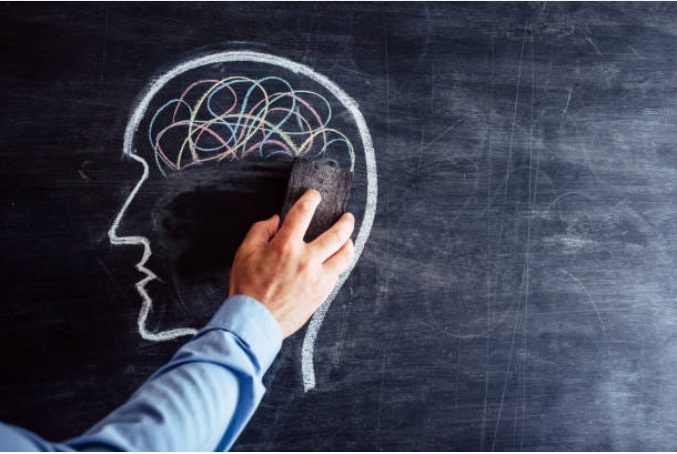
Since our brain is not finite, it is required to effectively manage memory storage. For instance, the numerous physics formulas we memorized last semester for an exam are probably forgotten or mostly left as fractions. On the contrary, the four fundamental arithmetic operations — addition, subtraction, multiplication, and division — are used daily and remain in our brains. This is adaptive forgetting. Well, it is way more complicated than just forgetting hard formulas and retaining easy ones. Adaptive forgetting is the brain’s mechanism for retaining information about the past when it is likely to be useful in the future and forgetting when it is not. Information about a past experience is assessed as useful when it is frequently used in daily life or when it allows us to anticipate what may happen. Older memories that are relatively not recalled or reused so frequently are considered unuseful and become forgotten. However, when an old memory is necessary for anticipating the future, it will remain in the brain waiting to be extracted and recombined.

 Teens Connect The World: Brain, Children and Love
Leave a comment