The counter-intuitive way in which memory is stored in our brain.

Brain Awareness Week (March 11 – 17, 2024)
The hippocampus is the part of the brain dealing with memory — this we all know. We also know its shape and location: The Hippocampus, named after its resemblance to a seahorse due to its curved shape, is located on the floor of each lateral ventricle of the brain.
We memorized all of this by heart for our psychology exams. But how exactly is memory stored in the hippocampus? How does the hippocampus effectively manage the storage system without overload? I finally learned the answer to this question, at a Brain Awareness Week lecture.
Somehow before taking the lecture, I simply assumed that areas of the hippocampus would get full, one by one. The older memories would be stocked at the bottom, and the newer ones would come in, one by one. Like the image of an empty jar being slowly filled with beans, or like a piggy bank being slowly filled with quarters from the bottom.
I was wrong. The process by which the hippocampus stores memories is known as memory consolidation, and it involves several stages. The initial stage of memory consolidation involves the strengthening of synapses, or connections, between neurons in the hippocampus. As these connections are strengthened, memory is encoded in the patterns of activity among these neurons. Over time, the memory becomes more firmly established in the brain, and the hippocampus gradually spreads memory to other brain regions, such as the neocortex, for long-term storage.
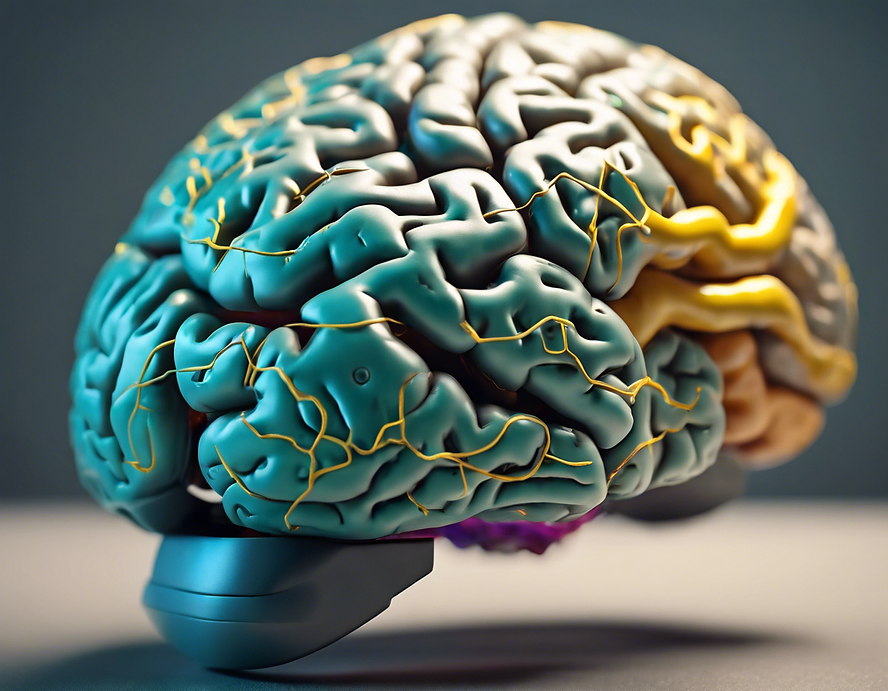
In short, memories are not stored in a single location. Memory is scattered across the brain, as neural patterns. To return to our sea horse imagery, memory is broken down into bits and pieces and saved all over: some in the eye area, some in the tail, and some near the belly.
Memory is Distributed — Theories
That memories are represented by patterns of activity across multiple neurons and synapses supported the idea that memories are not stored in a single location within the hippocampus, but rather memory is distributed across multiple regions within the hippocampus. And when the memory is retrieved, the pattern of neural activity that represents the memory is reactivated across these same regions of the hippocampus.
Here are some major theories and concepts showing distributed memory storage:
- John O’Keefe, 1971: discovered “place cells” in the hippocampus that are involved in spatial navigation and the formation of cognitive maps.
- Howard Eichenbaum, 1992: proposed the concept of “memory traces” in the hippocampus and suggested that the hippocampus stores memories as distributed patterns of activity across multiple neurons and synapses.
- Lynn Nadel, 1997: Proposed the concept of “multiple trace theory”, which suggests that memories are stored in distributed neural networks rather than in a single location.
- Richard Morris, 2003: proposed the concept of “pattern completion” in the hippocampus, which suggests that the brain can retrieve complete memories from incomplete or partial cues by reactivating the pattern of neural activity associated with the memory.
Memory is distributed — empirical evidence
A wealth of research in neuroscience and cognitive science back up the claim that constituent features of memory are distributed widely across different parts of the brain, such that no single location contains a literal trace or engram that corresponds to a specific experience.
- Studies on amnesia patients: Patients with damage to the hippocampus have deficits in retrieving memory. However, research has shown that their memory deficits are not limited to specific types of information or specific time periods, but rather affect all aspects of memory. This suggests that memories are not stored in a single location, but rather distributed across the brain.
- Neuroimaging studies: Functional magnetic resonance imaging (fMRI) and positron emission tomography (PET) have allowed researchers to identify brain regions that are active during different types of memory tasks. These studies have shown that different types of memories, such as episodic, semantic, and procedural memories, involve activity in different regions of the brain.
- Studies on memory consolidation: Studies on memory consolidation have shown that this process involves changes in the connectivity between different brain regions, suggesting that memories are not stored in a single location, but rather distributed across the brain.
- Studies on memory retrieval: Memory retrieval is the process of accessing stored memories. Studies on memory retrieval have shown that this process involves activity in a network of brain regions, including the prefrontal cortex, hippocampus, and parietal cortex, suggesting that memories are not stored in a single location, but rather distributed across the brain.
The professor at the lecture gave an example of a “Grandma memory” to explain this concept. He gave two options for storing specific memories of Grandma:
Option 1. Specific neurons are holding the information about Grandma, so a specific part of the brain getting impaired will make me forget about grandma.
Option 2. Information about Grandma is widely spread through the brain, so a specific part of the brain getting impaired will be replenished again by other regions of the brain providing grandma memories back.
What do you think is the answer?

 Teens Connect The World: Brain, Children and Love
Leave a comment