Chuseok, Across a Divided Peninsula
As we mark Chuseok—the mid-autumn harvest festival often called “Korean Thanksgiving”—Koreans everywhere gather to cook, travel home, and honor ancestors. The holiday predates the division of the peninsula; on the 15th day of the 8th lunar month, families prepare offerings, share special foods, and remember those who came before them.
But for North Korean refugees, there is no going back. Chuseok can hold two truths at once: gratitude for safety and freedom—and grief for the empty seats at the table.
“The first Chuseok in the US felt very empty and lonely… It didn’t feel like a holiday.” —Holly, who escaped North Korea in 2013
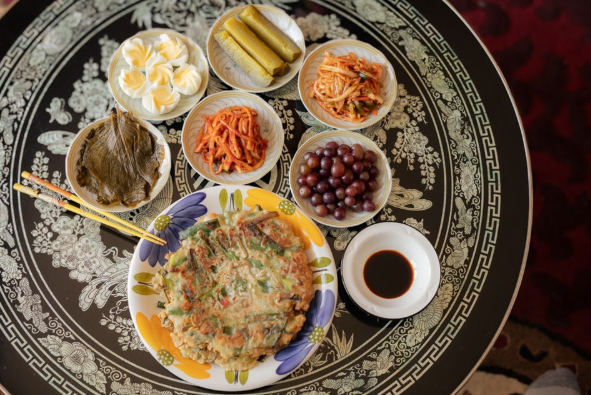
Holly still keeps Chuseok’s ancestral rites (차례, charye). She cooks for hours, setting out an offering table and preparing dishes like pajeon, remembering parents and loved ones on the other side of a border she cannot cross. It’s a way to honor family, keep culture alive for her daughter, and name a loss that words can’t quite hold.
What Chuseok Looks Like, North and South
In South Korea, Chuseok stretches over three days of nation-wide travel and family reunions. Families hold charye in the morning, visit ancestral graves (seongmyo), and celebrate with foods like songpyeon—chewy half-moon rice cakes steamed over pine needles—alongside pajeon, galbijjim, and japchae.
In North Korea, Chuseok is a single-day observance and is less prominent than state holidays. Travel is tightly restricted, so many spend the day with relatives nearby. People still prepare offerings and visit graves, and you’ll find familiar traditions like yutnori and ssireum. Even the food reflects local variations: North Korean songpyeon is often larger and savory.
Why This Day Hurts and Matters
For many who have fled, Chuseok can sharpen the ache of separation. Refugees work to rebuild in freedom while staying connected to family members still inside North Korea—sending support when they can and passing down language, food, and memory to their children. Liberty in North Korea (LiNK) walks with refugees through rescue and resettlement so they can stabilize, reunite with loved ones in freedom, and keep their culture flourishing.
LiNK has helped rescue almost 1,400 North Korean refugees and children and reunite 500+ people with family in freedom—a tangible push against enforced separation. Holly herself reached freedom through LiNK’s networks; today she celebrates Chuseok in community, wearing hanbok with her daughter and teaching the meanings behind each dish.
How You Can Show Up This Chuseok
- Learn & share. Read LiNK’s Chuseok explainer and refugee stories; talk with friends about why family reunification matters. Small conversations change narratives. Liberty in North Korea
- Support rescues and resettlement. Donations fuel a 3,000-mile underground-railroad-style route and help new arrivals find stability and send lifelines home.
- Host a community table. Cook songpyeon or pajeon, share the holiday’s history, and take a moment to honor separated families. (If you do, consider highlighting LiNK’s work.)
Chuseok is about harvest and remembrance—gathering what the year has given and honoring those who made our lives possible. For refugees, honoring that legacy also means building a different future: one with open borders at the family table. May we hold joy and grief together, and help make more reunions possible.

 Teens Connect The World: Brain, Children and Love
Leave a comment