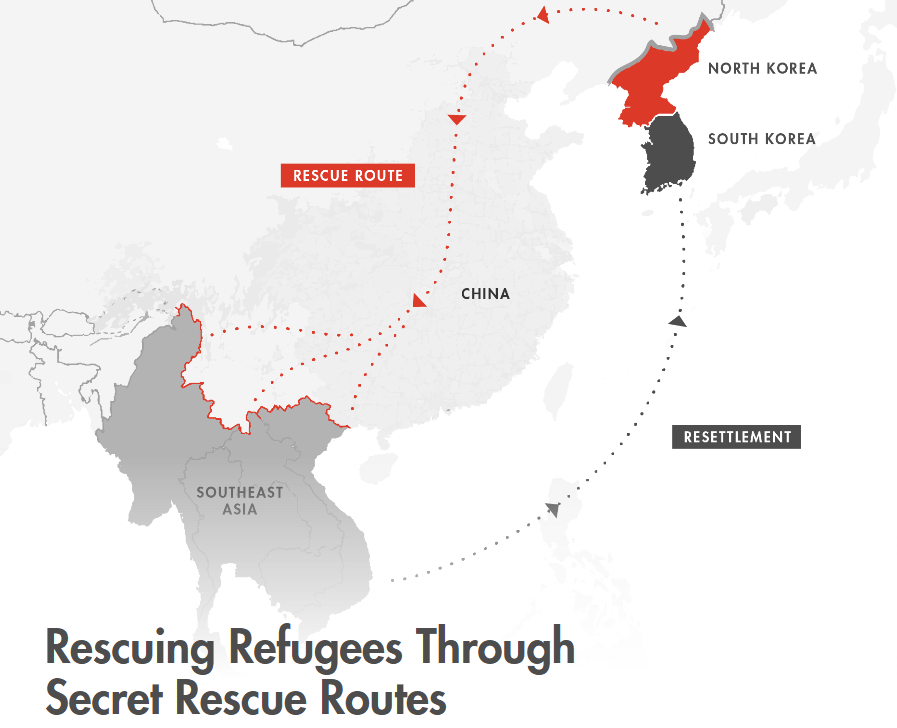
At Liberty in North Korea (LiNK), secret rescue routes stretch nearly 3,000 miles starting in Northeast China and ending when a North Korean refugee finally reaches Southeast Asia and can safely travel on to South Korea. It’s often described as a modern underground railroad, and that’s exactly what it feels like.
Every step of the way, refugees face the terrifying possibility of arrest and forced repatriation. The risk is constant. That’s why LiNK’s local partners are so critical. They quietly guide people through this journey, doing everything they can to protect both their safety and their dignity.
When a rescue mission succeeds, the joy is hard to put into words. Our field team finally meets the people we’ve only known through encrypted messages and careful planning. In those first few days of freedom, you see some of the most moving, human moments: laughter, disbelief, tears, and a lot of quiet staring at things most of us take for granted.
In a recent group, two best friends arrived together. They had spent years in hiding in China, supporting each other through fear, poverty, and uncertainty. Now, they’re starting a new life side by side in South Korea.
One of them looked up and said,
“I have never seen clouds so beautiful. Don’t you think the clouds here are different from those in China?”
Her friend answered,
“It’s just that we rarely looked up at the sky because we were so busy with life. It’s the same sky.”
Why rescues are getting harder and more expensive
Rescue work has never been simple, but in the past few years it’s become even more challenging logistically, legally, and financially. We asked LiNK’s Field Manager, Jennifer, to explain what’s happening.
After China revised its Counter-Espionage Law in July 2023, the definition of “illegal acts against the state” expanded to include helping North Korean refugees. This instantly made the work far more dangerous for local partners. Many had to stop for their own safety. Those who continue need stronger protection, backup support, and emergency funds if something goes wrong.
At the same time, China’s surveillance technology and border security have grown more sophisticated. Every route must be checked and re-checked. If one path is compromised, building a safe alternative takes significant time, caution, and resources. Each additional layer of security, extra stops, safer drivers, and secure accommodations adds to the overall cost.
And yet, the reality remains: North Korean refugees are still trapped in China, still at risk, and still waiting. As Jennifer put it, we cannot simply walk away just because the work has become more dangerous or expensive.
Today, it can cost up to $10,000 to bring a single person to freedom.
That amount covers more than just transportation. It includes safe housing, food, medical care, emergency supplies, and the many hidden costs of keeping people as safe as possible in an increasingly hostile environment.
Why your support matters
Every successful rescue represents a life and often an entire future family changed. Thanks to supporters, LiNK has helped bring over 1,400 North Korean refugees and their children to freedom.
But many more are still waiting for their chance.
If this moves you, now is the time to stand with them again—to share their stories, raise awareness, and, when possible, support the rescues that make freedom a reality.

 Teens Connect The World: Brain, Children and Love
Leave a comment